May 19, 2026 -- Nation Celebrates Centennial by Earl Shreckengast
COUNTDOWN TO 150---Nation Celebrates Centennial with a World’s Fair
In 1876, national and international attention focused on West Philadelphia when its Fairmount Park was the site of the Centennial Exposition. The Exposition, which celebrated the 100th anniversary of the Declaration of Independence, was also the first world's fair held in the United States. Marysville’s Charles F. Koester attended the Exposition and was one of six managers from Kansas who organized the state’s effort to showcase its culture and products on the world’s stage.
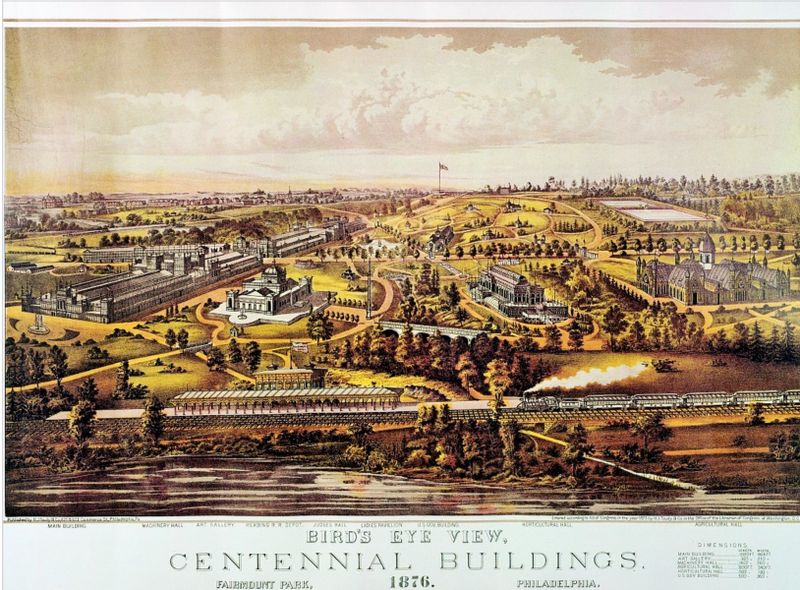
More than 200 buildings were constructed on the 285-acre Fairmount Park site for the Centennial Exposition. These buildings featured inventions, artworks, agricultural products, and manufactured goods.
The most impressive building was the Main Exhibition Building, the largest building ever constructed at the time. A prefabricated structure constructed over 18 months, it cost $1,580,000, covered 35 acres (26 football fields), and extended one-third of a mile in length.
One of the major attractions was the Corliss Centennial Steam Engine, which ran power to all the machinery in the Machinery Hall as well as other parts of the world's fair. The 1,400-horsepower engine was 45 feet tall, weighed 650 tons, and had one mile of overhead line belts connecting to the machinery in the building. It symbolized the technology that was transforming the United States into an industrial powerhouse.
A favorite with Centennial crowds and Charles Koester was the Lockwood envelope-making machine that folded flat pieces of paper into envelope form. He enthused about it in a May 20, 1876, report in the Marshall County News. “The government envelope in which this is sent was manufactured in the United States government exhibition building in Fairmount Park by one machine, which takes the paper from a pile placed before it, affixes the mucilage, fold and stamps, and counts them in packages of twenty-five each, all in less time than it takes you to read this explanation.”
There were numerous firsts at the Centennial Exposition:
· The first public demonstration of Alexander Graham Bell's telephone.
· The first model kindergarten.
· The introduction of root beer (Hires), popcorn, the band-aide, and the banana to U.S. audiences.
There were displays of new inventions such as typewriters and sewing machines. The right hand and torch of the yet-to-be-completed Statue of Liberty were on display. Twenty-one of the 38 states had exhibits.
There were “oddities,” too. One popular exhibit was the head of a classical heroine, Iolanthe, sculpted out of butter. A liberty bell made from tobacco plugs and a Moorish chandelier with cigars for candles hung in Agricultural Hall. On the wall of the Iowa Building were two huge, flowered wreaths made entirely from human hair. Proving that Americans weren't alone in their enthusiasm for this kind of oddity, the government of Venezuela exhibited a picture of George Washington made from the hair of Simon Bolivar, their George Washington.
Charles Koester summed it up this way: “Without a doubt this is the grandest exhibition ever known in the world. The display in the various arts and sciences, manufactures and productions cannot be comprehended; there is too much of it. I wish that every man in Kansas could be here to see it.”
A bird’s eye view of the Centennial Exposition grounds is above.
Originally posted by Koester House Museum & Gardens via Locable
Koester House Museum & Gardens
919 Broadway Street
Marysville, KS 66508
785-562-2417
www.koesterhousemuseum.com
Alert
We're open but with new hours/limited operations!
The museum is closed from November - March for regular tours. Special tours may be arranged. Watch our calendars & posts to announce special events to be held at the museum during our closed winter months.